The Despić House, one of the annexes of the Museum of Sarajevo, is a representative example of the residential culture of the Serbian merchant class from the late 18th to the early 20th century. Located on the right bank of the Miljacka River, it was built in several phases and periods, and its additions and adaptations testify to the development of Sarajevo’s civic life.
The house belonged to the distinguished Despić merchant family, which played a significant role in the economic, political and cultural life of the city. The progenitor of the family, Risto Slijepčević, came to Sarajevo from Gatačko polje to learn the furrier’s craft. After marrying Despa Despić, their descendants adopted their mother’s surname and established one of the wealthiest merchant families in Sarajevo’s bazaar.
Among the family members, Hadži-Makso Despić stands out as its most prominent figure. He was born, lived and died in the Despić House. His life spanned three different states — the Ottoman Empire, the Austro-Hungarian Monarchy and the Kingdom of Yugoslavia. As a successful merchant, he travelled to many countries, made two pilgrimages to Jerusalem and recorded his experiences in his memoirs. He also served as the city treasurer during the Ottoman administration and, following the arrival of Austro-Hungarian rule, was part of a delegation that visited Emperor Franz Joseph.
His testament from 1921, which opens the museum exhibition in the Despić House, reflects Orthodox funeral customs in Bosnia and Herzegovina, as well as his personal views on modesty and the transience of material wealth, emphasizing the importance of spiritual values.
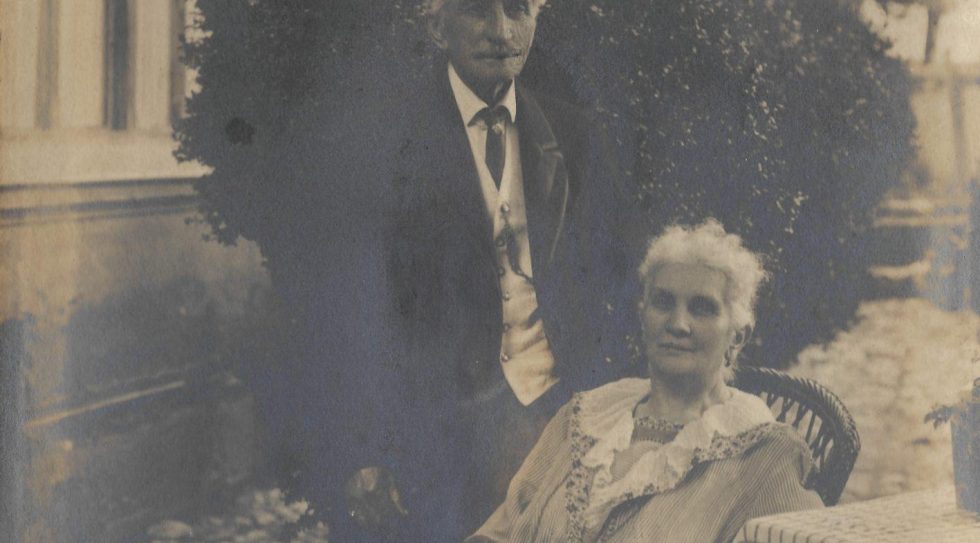
From the Photo Library of the Museum of Sarajevo: Makso and Zlatka Despić in the courtyard of the Despić House.