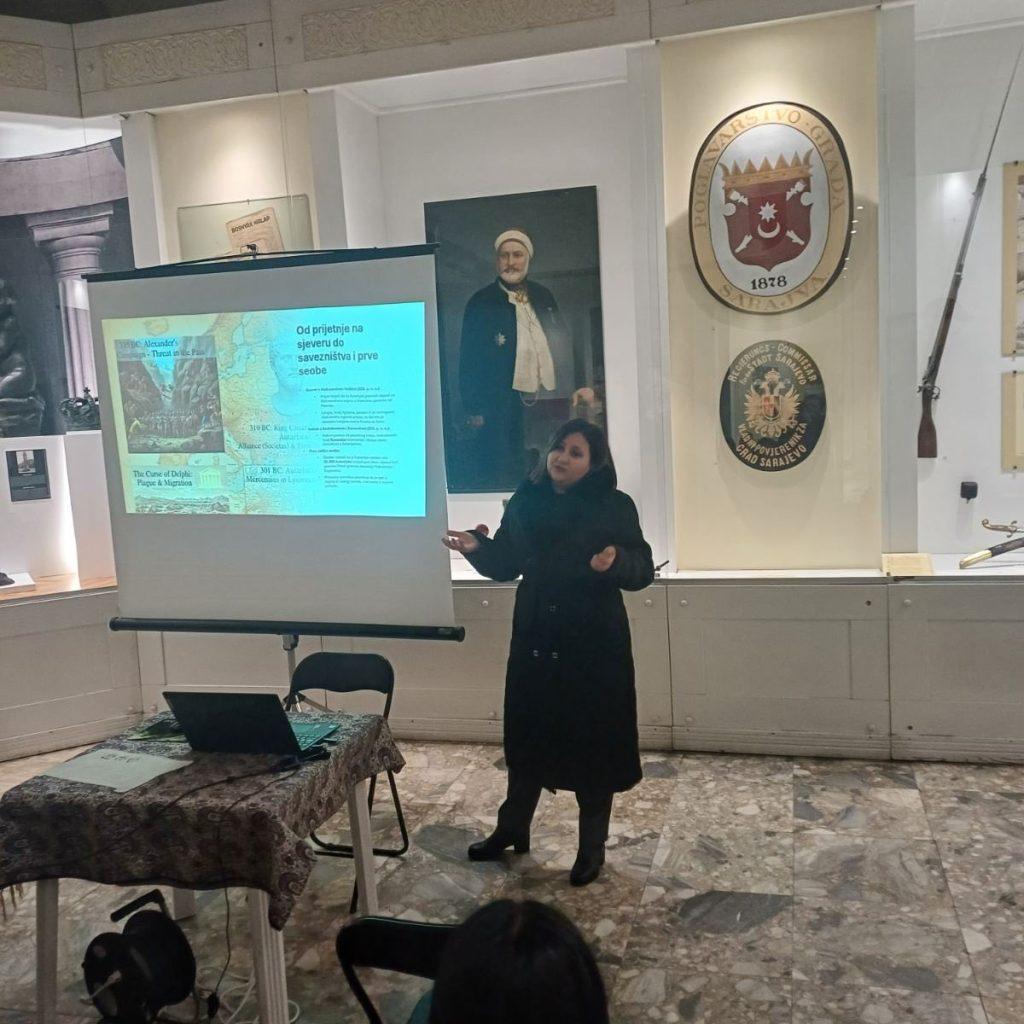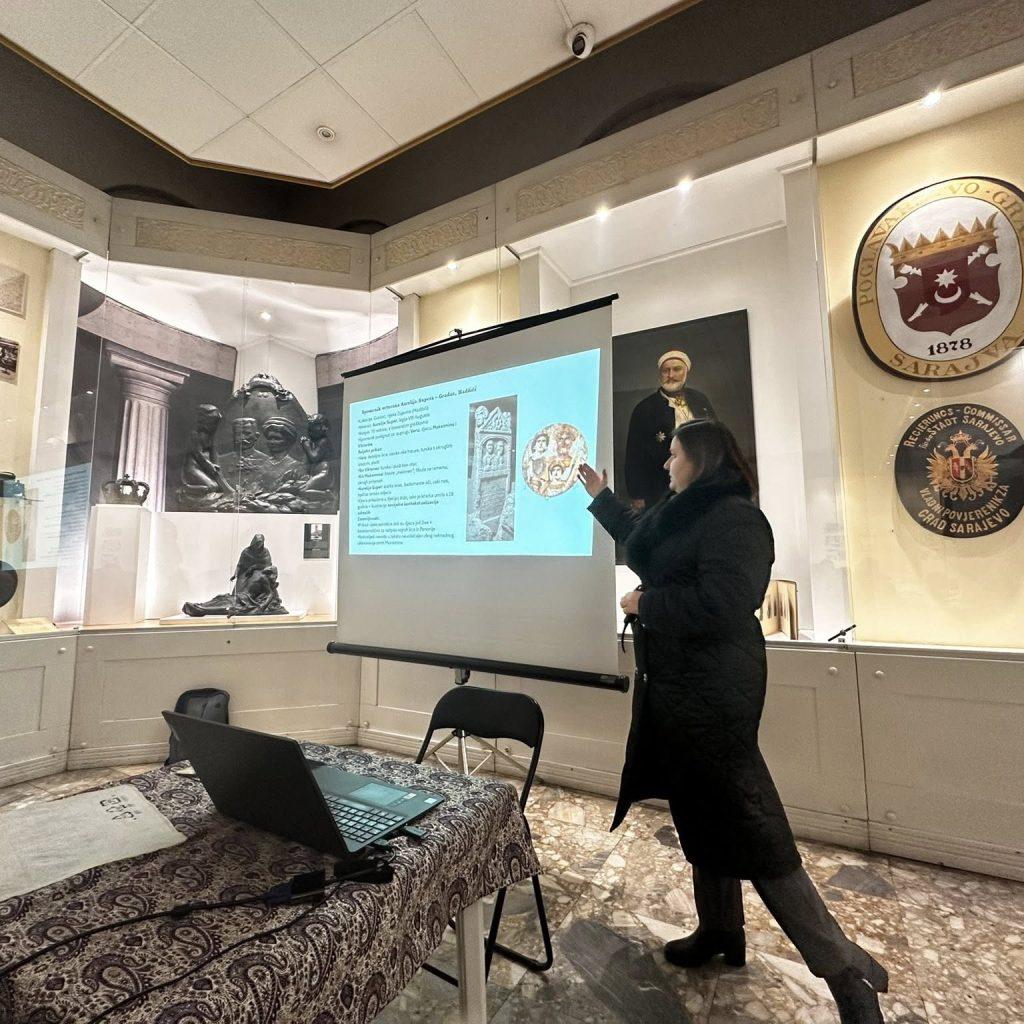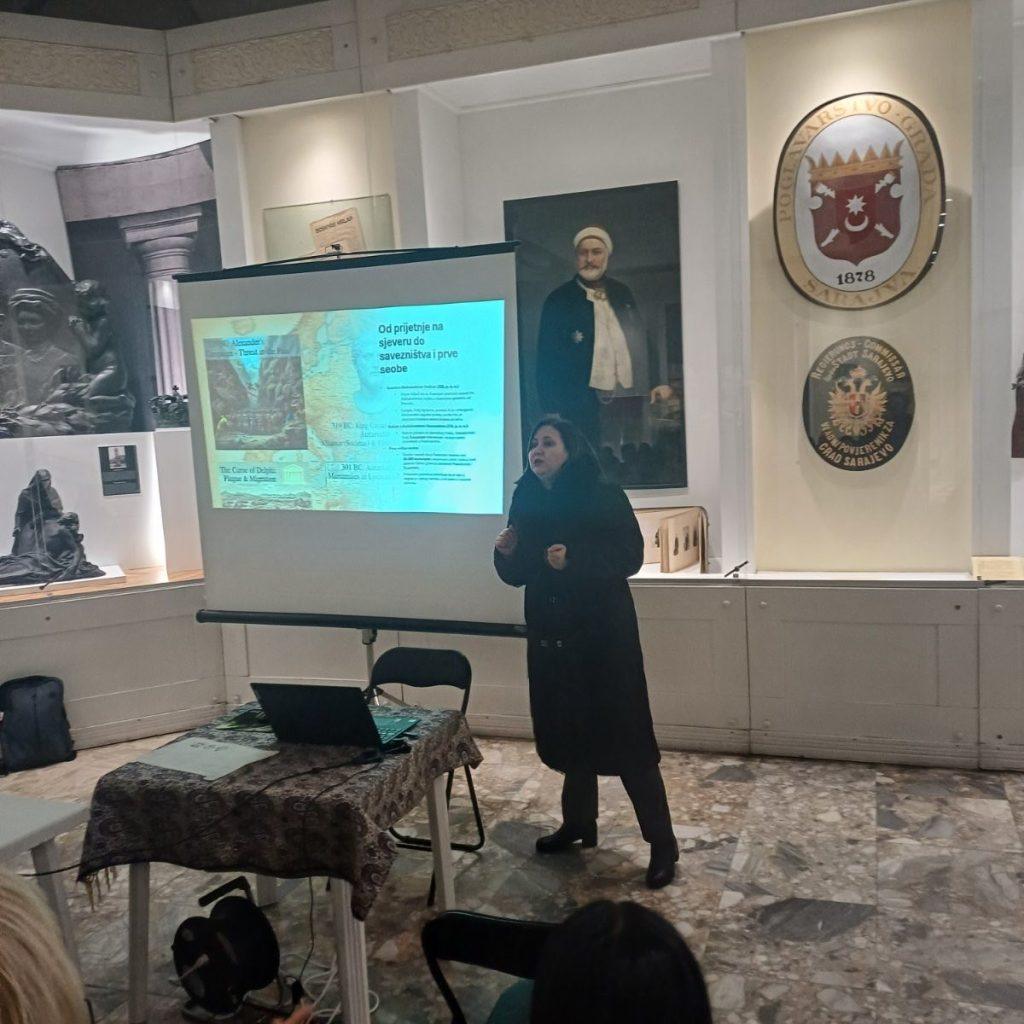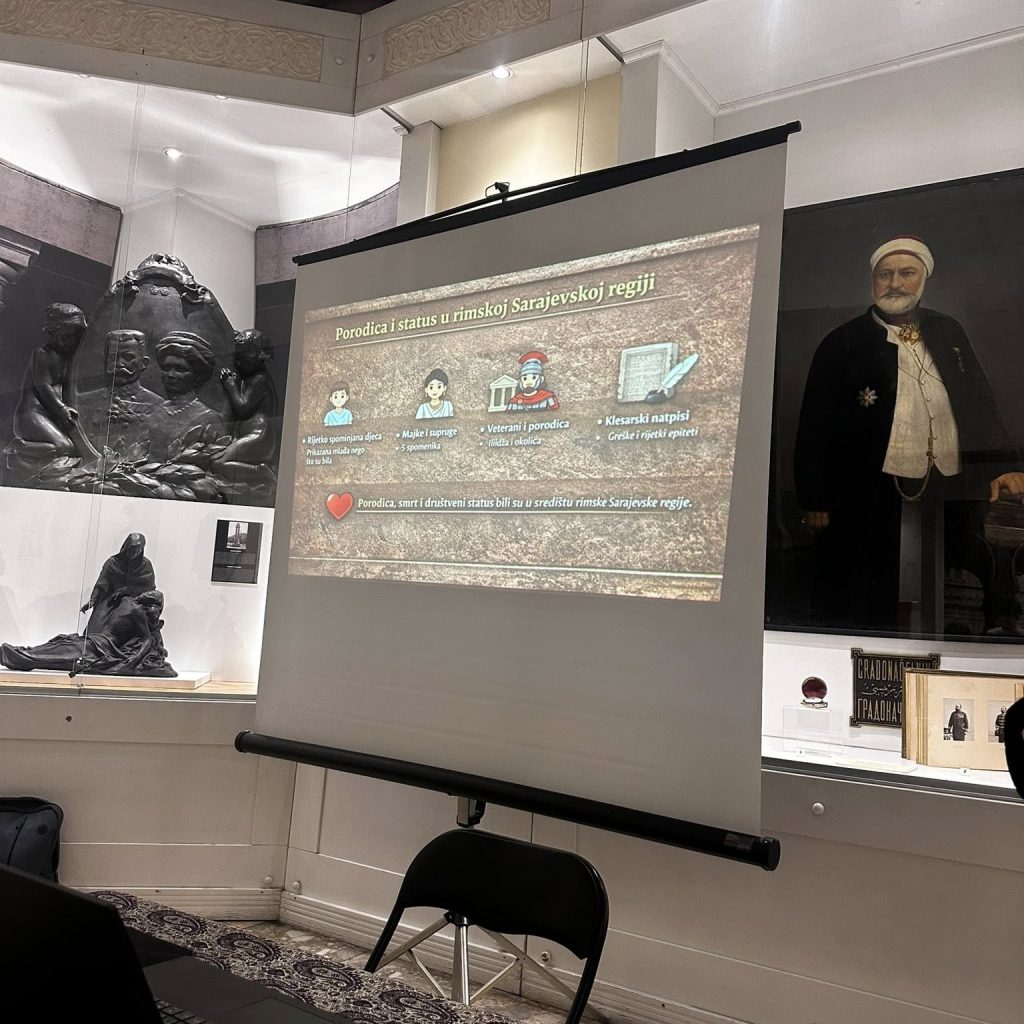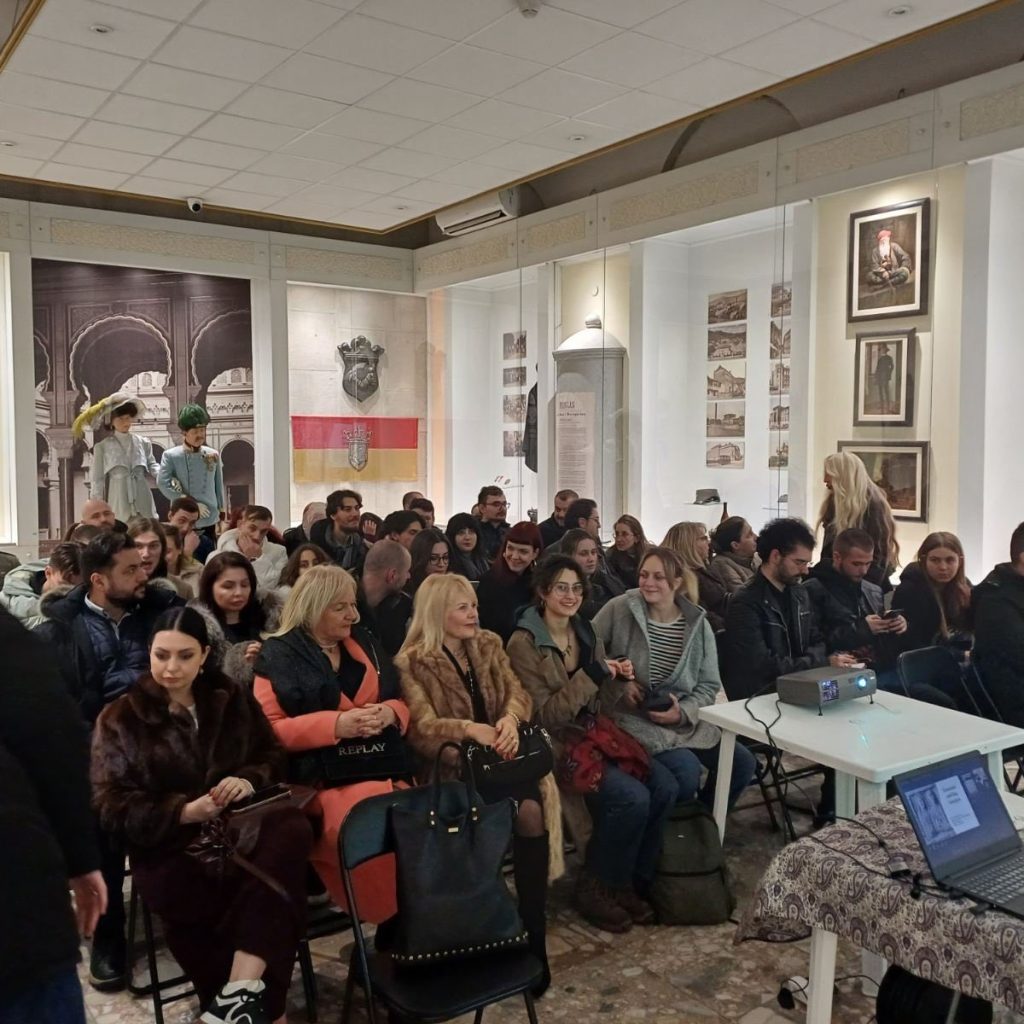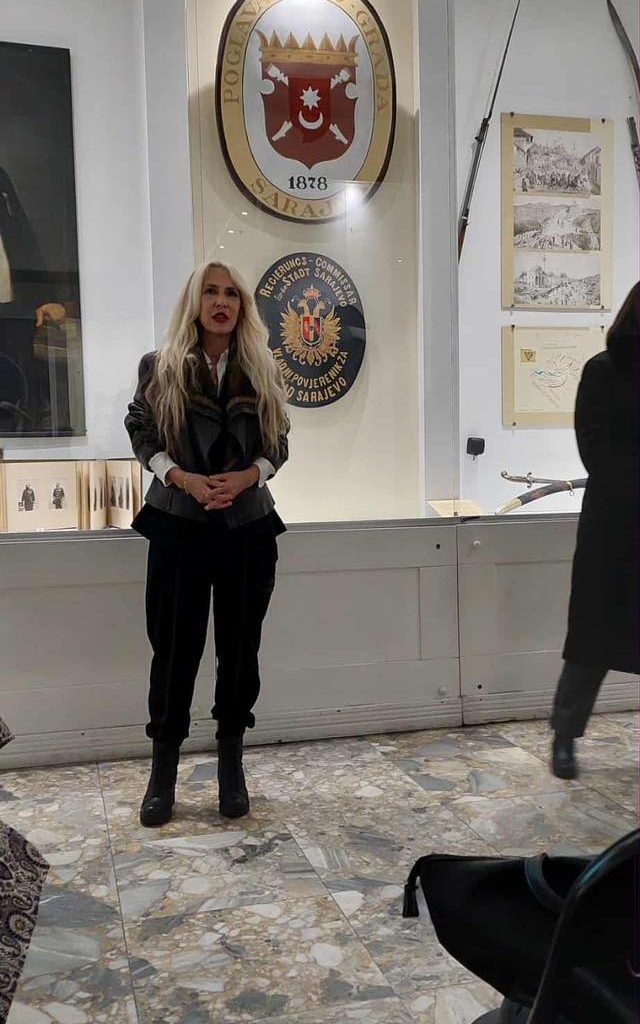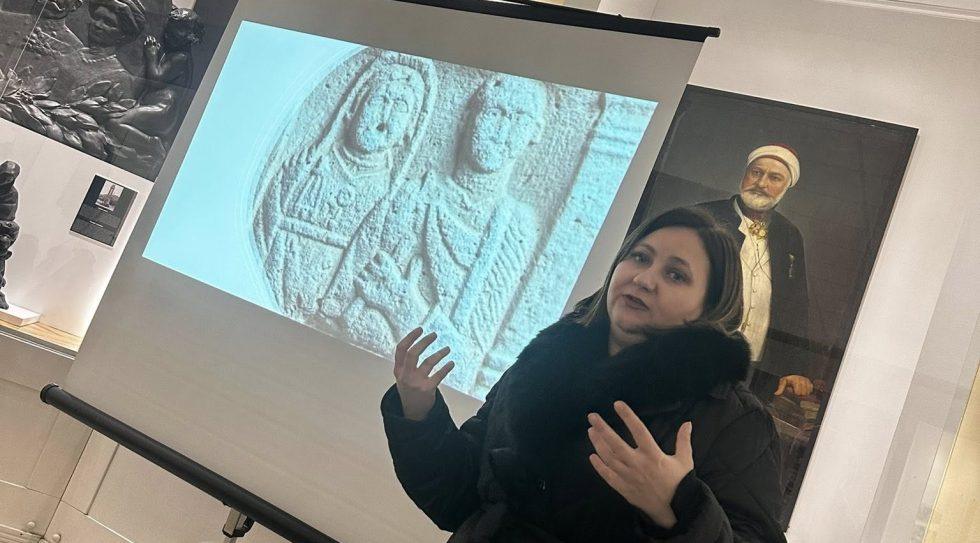
Last night, a lecture entitled “The Population of Ancient Sarajevo” was held at the Sarajevo Museum 1878–1918, delivered by Prof. Dr. Amra Šačić-Beća, Full Professor at the Department of History, Faculty of Philosophy, University of Sarajevo.
Life in the Sarajevo region during antiquity was diverse and dynamic. People worshipped local, Roman, and Thracian deities, practised various crafts, and built grand villas, enjoying the benefits of healing springs that made this area particularly attractive. Thanks to epigraphic monuments, we gain insight into the lives of women and children, representatives of local authorities, and artisans. Interestingly, the guardians of tradition were not men but women, who preserved local identity through traditional dress and jewellery despite strong Roman influence. During the reign of Emperor Trajan (98–117), members of the local elite began to receive Roman citizenship, while the general population was granted this privilege only after the year 212 and the Edict of Caracalla. The Sarajevo region was especially appealing to Roman veterans, primarily because of its favourable location and the healing thermal springs at Ilidža.
All these facts together show that ancient Sarajevo was a place where tradition and Roman culture met, and where local communities successfully preserved their identity within a new political and social framework.
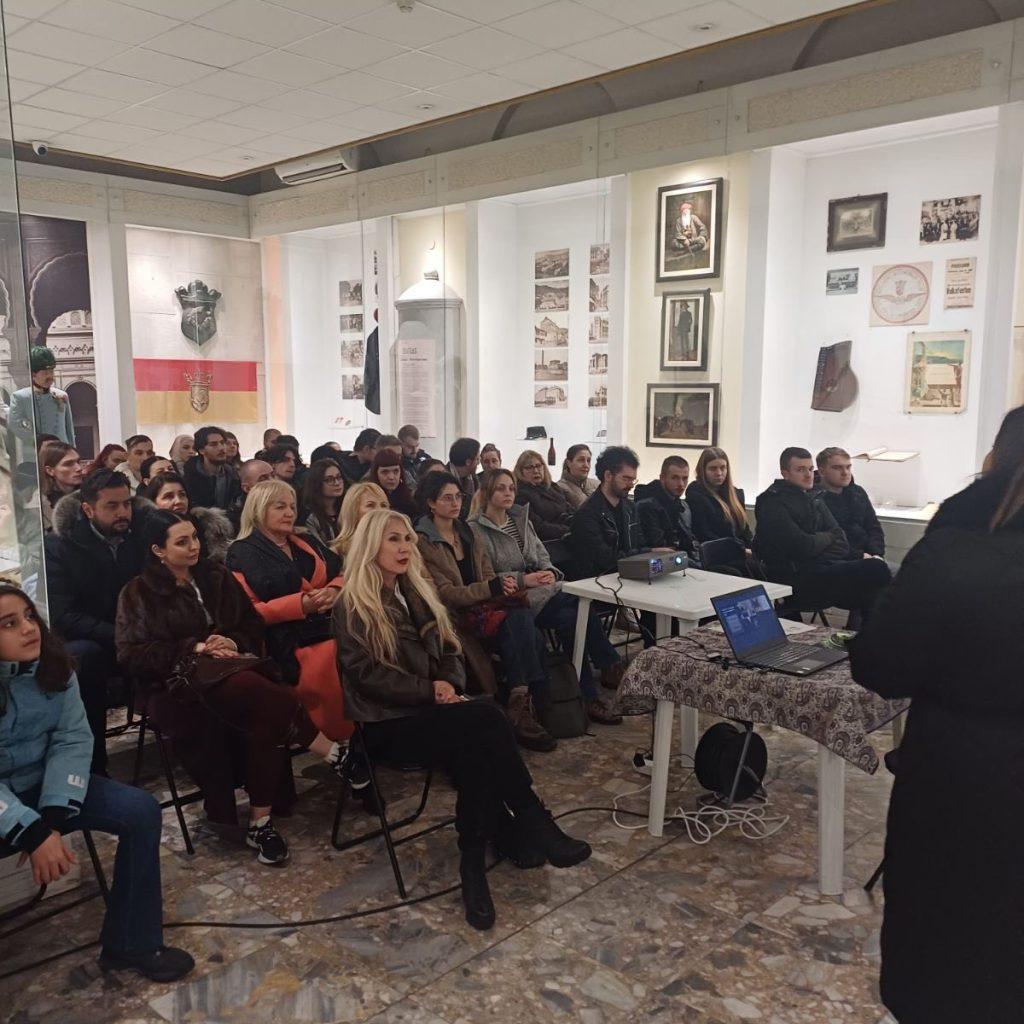
The lecture attracted great interest from the audience, who gained new insights, particularly into the quality of life of the indigenous population of ancient Sarajevo.
We extend our sincere thanks to Professor Šačić-Beća for her inspiring lecture, as well as to our partners in the organisation, the Centre for Historical Research and the Bathinvs Association.