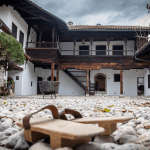
Today we bring you the story of the distinguished Sarajevo families Glođo and Svrzo, whose history is inseparably linked to one of the most important houses of old Sarajevo – Svrzo’s House, today an annex of the Sarajevo Museum.
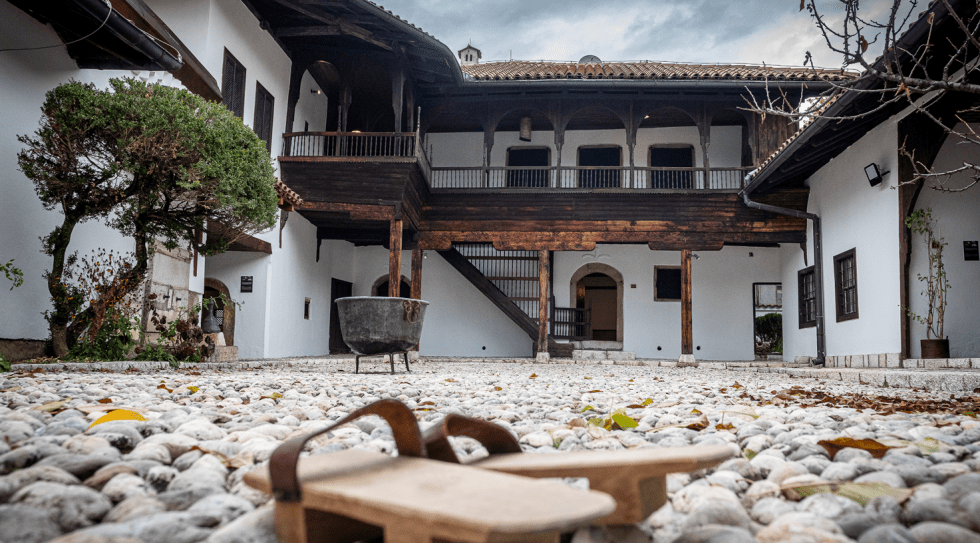
Svrzo’s House is a unique example of Ottoman-Bosnian architecture and the traditional way of life of the Bosniak population over the past two centuries. It is located in Glođina Street, on the site of the former Ćurčić Hill. The house was originally built by the prominent Sarajevo family Glođo, and later, through a marriage contract, came into the ownership of the equally respected Svrzo family from Ferhadija Mahala. The Svrzo family lived in the house until 1952, when it was sold to the Sarajevo City Museum, and since 1965 the building has been open to the public as a museum.
The most notable member of the Glođo family was Munib Efendi Glođo, a member of the qadi (judge) class—a learned, respected, yet exceptionally modest and generous man. He held numerous positions in state and waqf administration, was a member of several majlis councils, and for nearly eight years served as a representative of the mutawalli of Gazi Husrev-beg’s waqf, making a significant contribution to the development of waqf properties and institutions. As a participant in the well-known Glođina Rebellion of 1840, he came into conflict with the Bosnian vizier Vedžihi Pasha, after which he was expelled from Bosnia. He spent the remainder of his life in captivity, where he died in 1850.
The Glođo family owned shops and warehouses in the Bezistan and other waqf buildings, as well as extensive landholdings in the surroundings of Sarajevo and the Fojnica–Kreševo area. Particularly noteworthy was the rich and valuable library of Munib Efendi Glođo, containing works in law, literature, and linguistics, which testifies to the high level of education and cultural life of the period.
Following the marriage of Munib Efendi’s widow Fatima-Ašida to Ašir Svrzo, the two families became closely connected, and the house passed into the ownership of the Svrzo family. The Svrzos were an old agin and ulema family, owners of numerous estates in Sarajevo Polje and beyond, including Kromolj, Hotonj, Koševo, Hrasnica, and Visoko. Members of the Svrzo family played an important role in the social, religious, and political life of Sarajevo, serving as qadis and prominent citizens, and were known as strong advocates of the cultural, religious, and educational autonomy of Bosniaks, as well as notable benefactors of humanitarian and educational societies.
Today, Svrzo’s House stands as a witness to the rich past of Sarajevo and the lives of its distinguished families, preserving the story of a space in which the spirit of the city was shaped over centuries.
You can still experience these stories firsthand—visit Svrzo’s House this weekend and discover the spirit of old Sarajevo.