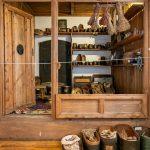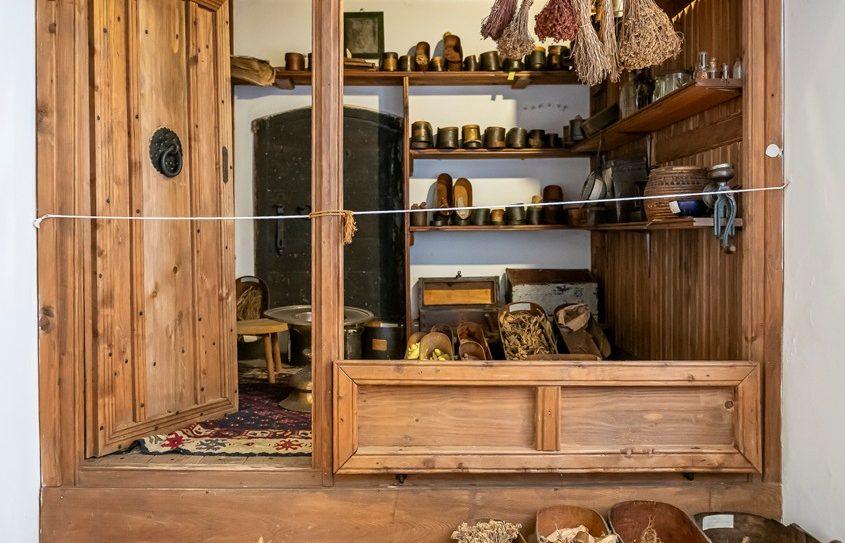
The Museum of Sarajevo preserves a unique museum ensemble in its collection—the last surviving atar shop in Sarajevo, together with an almost complete original inventory. This exceptional heritage represents a rare and valuable source for studying the city’s cultural and historical legacy, as well as the history of medicine, craftsmanship, and trade.
The atar shop belonged to the Sephardic Jewish Papo family, who practiced the atar craft for more than 300 years, meticulously keeping business records such as manuals, ledgers, and catalogues. For generations, the shop operated at the same location in Baščaršija, the heart of Sarajevo’s traditional craft and commercial life.
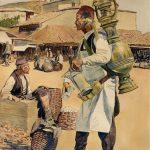
After settling in Sarajevo—then one of the most important craft centres in the Balkans—the Jewish community soon became actively involved in the city’s commercial and financial life. Among the many shops they established were the first atar shops, mentioned in written sources as early as 1565. These former “pharmacies” offered medicinal herbs, minerals, spices, essential oils, fragrances, ointments, and various preparations used in the making of remedies.
Due to growing demand, an atar bazaar gradually developed in Baščaršija, followed by the formation of an atar guild in the 17th century. While most raw materials were of local origin, more expensive spices, rare herbs, and fragrances were imported via trade routes from Venice, Dubrovnik, Istanbul, and other cities. Records from the 18th century reveal that the Jewish community in Sarajevo even maintained its own commercial agent in Venice.
By 1874, more than 30 atar shops were operating in Sarajevo, and alongside Jews, members of other religious communities—particularly Muslims—also began practicing this craft. Sadly, at the beginning of the Second World War, in mid-1941, the last two Jewish-owned atar shops in Sarajevo were forcibly closed.
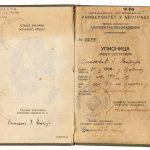
However, by a twist of fate, the atar shop owned by Santo Papo, the last Sarajevo atar from this family, was preserved despite the confiscation, sale, and devastation of Jewish property. Santo Papo and his son Albert perished during the war, yet their shop, with its nearly complete inventory, was transferred to the Sarajevo City Museum in 1951. The Museum later enriched the collection by acquiring additional objects and documents, including the ledger of David Papo.
Today, thanks to its outstanding museological value, the atar shop holds a special place within the Museum of Sarajevo’s collections. It is on permanent display in the Museum of Jews of Bosnia and Herzegovina, an annex of the Museum of Sarajevo, where it stands as a testament to the rich tradition of old crafts and the centuries-long life of Sarajevo.