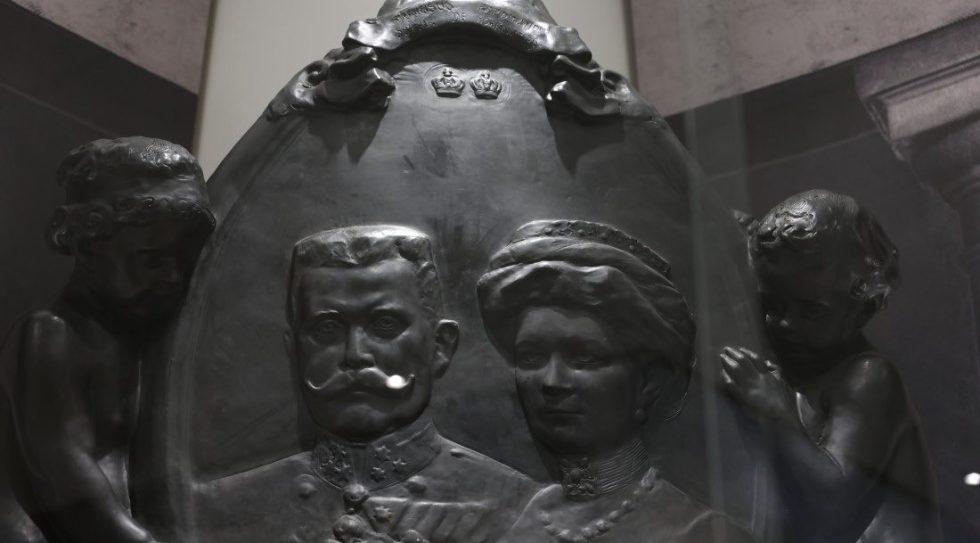
This monumental work of late Secession style, standing an impressive 12 metres high, was created in 1916 according to the design of Hungarian sculptor Eugen Bory in Budapest. The monument consists of three key elements: a massive base made of Silesian stone with a bronze Pietà, a bronze medallion depicting Archduke Franz Ferdinand and his wife Sophie, and two stone columns made of Bihać limestone, adorned with bronze crowns.
The monument was solemnly unveiled on 28 June 1917, marking the third anniversary of the Sarajevo Assassination. However, following the political changes of 1918, it was removed, and its components remained hidden from the public eye for decades.
Thanks to a five-year project and the cooperation of several institutions, the Museum of Sarajevo initiated activities aimed at returning the monument to the place to which it historically belongs. Through the marking of the Sarajevo Assassination route, the widening of the pavement, and the reinstatement of Gavrilo Princip’s footprints in front of the Museum, the Monument to the Assassination has once again been returned to the public space—as a testimony of the past that we can now see, understand, and contextualise.