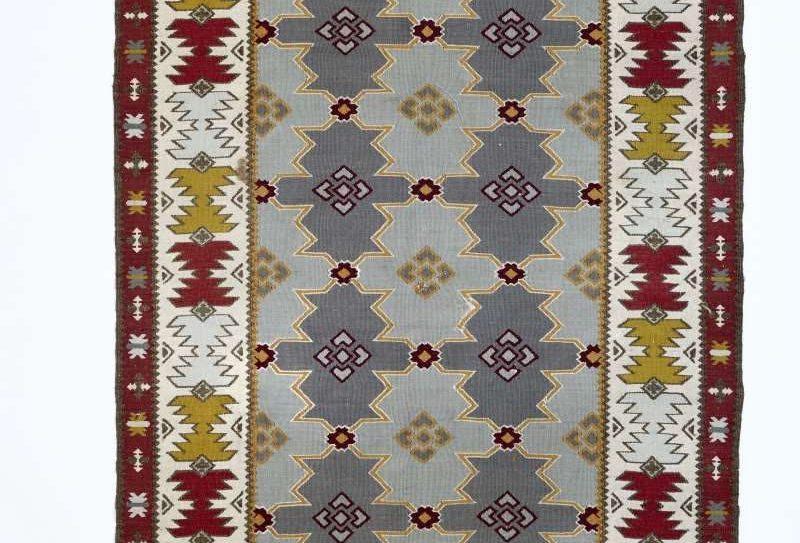
On the initiative of the Public Institution Museum of Sarajevo, the “Bosnian Carpet” was included in the Preliminary Open List of Intangible Cultural and Historical Heritage of the Federation of Bosnia and Herzegovina, as well as in the Preliminary Open List of Intangible Cultural and Historical Heritage of Bosnia and Herzegovina.
Following this, and in partnership with the Provincial Museum of Travnik and the dedicated researcher of Bosnian rugs, Dr. Amil Smajović, the Museum of Sarajevo submitted a complete application to the Federal Ministry of Culture and Sports. After review, the Ministry included the element “Bosnian rugs – collections of traditional Bosnian rugs, the techniques used in their weaving, kneeling methods, motifs, and symbols” on the Preliminary Open List of Intangible Cultural and Historical Heritage of the Federation of Bosnia and Herzegovina. This also meant that the “Bosnian Carpet” was listed on the same Preliminary List for Bosnia and Herzegovina.
Since 1949, the Museum of Sarajevo has been collecting, studying, preserving, publishing, and presenting Sarajevo’s social, economic, and cultural history from the earliest periods to the present day. Within the Ethnological Collection and the museum annexes Svrzina Kuća and Despića Kuća, the museum holds a significant collection of Bosnian rugs, all carefully documented, inventoried, and expertly described with photographs. This makes the Museum of Sarajevo one of the largest institutions in Bosnia and Herzegovina dedicated to preserving and studying the ornamentation, symbolism, materials, and other unique characteristics of Bosnian rugs.
Throughout history, Bosnia and Herzegovina has been renowned for its Bosnian carpets. While historians and ethnologists have interpreted the origins and development of carpet-making differently, it is clear that these techniques have existed in the region since the Neolithic period. The Bosnian carpet is not only part of family and social heritage but also an element of cultural memory and a visual marker of belonging to the traditions and space of Bosnia and Herzegovina.
Thanks to a close partnership with the prominent researcher and artist Dr. Amil Smajović, the director of the Museum of Sarajevo, Fatima Maslić, and the support of the Ministry of Culture and Sports of the Canton of Sarajevo, as well as recommendations from Minister Kenan Magoda and professional authorities, the Museum has established the necessary conditions to begin the procedure for UNESCO recognition.